
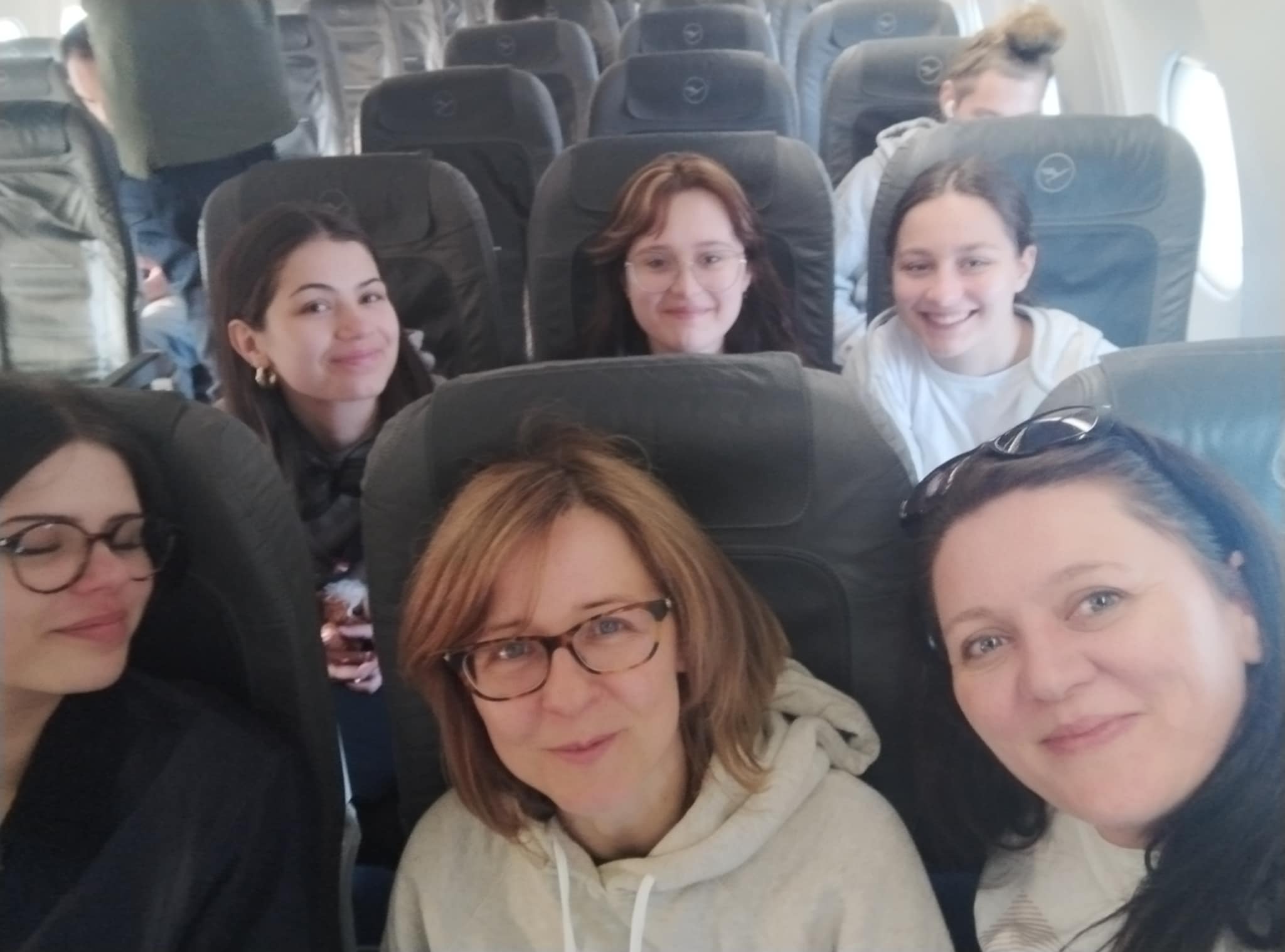
On the Erasmus Trail – Our Students’ Spanish Adventure
As part of the Erasmus+ project, students from our school visited Estella in Spain. This was the final working visit within the Generations Cycling 4 Inclusion & Climate Action project.
Below is a diary of our unforgettable journey.
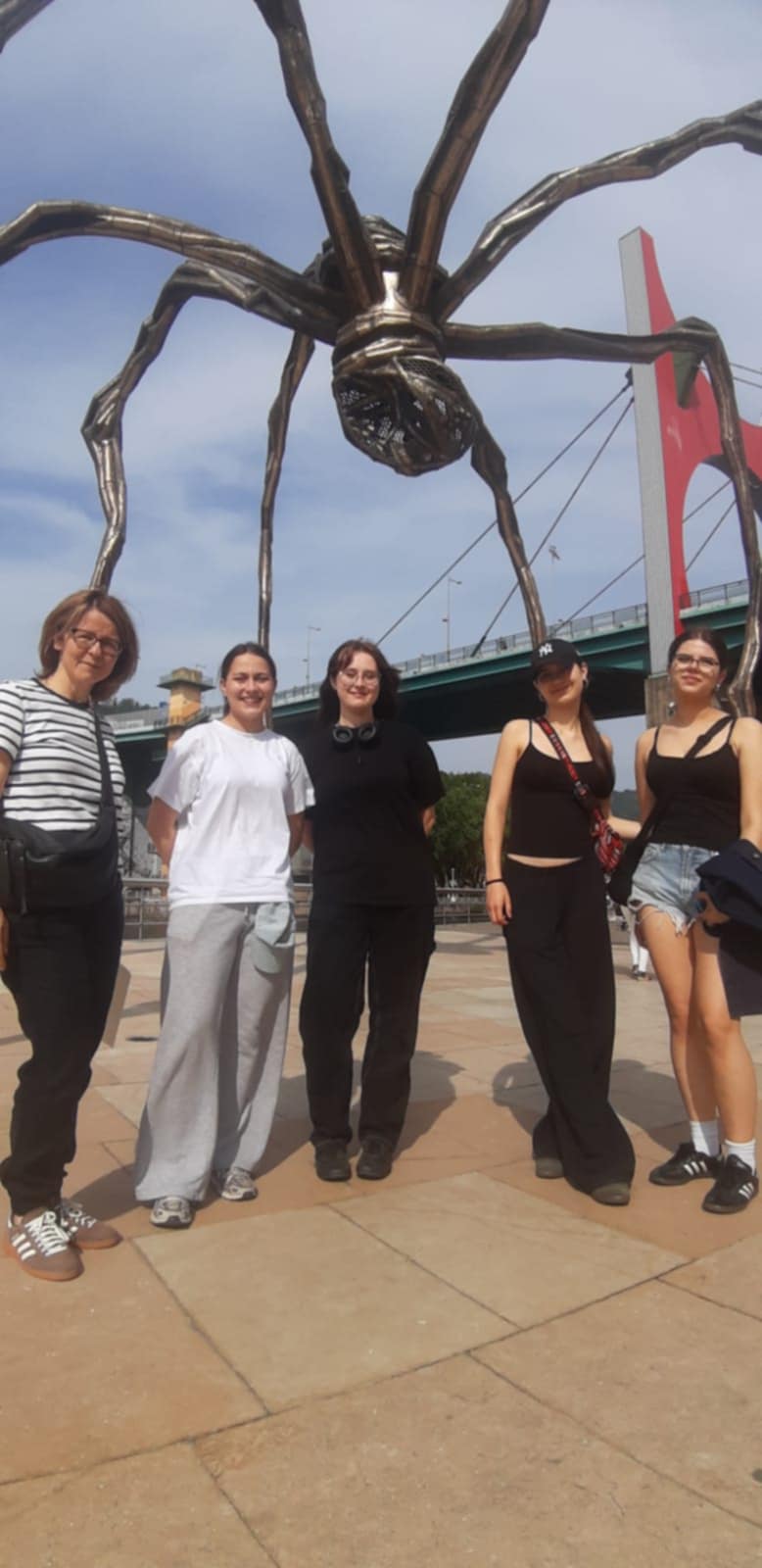
Day 1 – Bilbao: Breathtaking Art
Our Spanish adventure began at the crack of dawn. After a transfer in Munich, we arrived in Bilbao – the modern capital of Basque culture. We visited the Museum of Fine Arts and then the famous Guggenheim Museum. It is not only a gallery of contemporary art featuring works by artists such as Refik Anadol, Richard Serra, and El Anatsui, but also an architectural icon of the 21st century that left a huge impression on us.
Day 2 – Estella: Bicycles, Joy, and Generational Integration
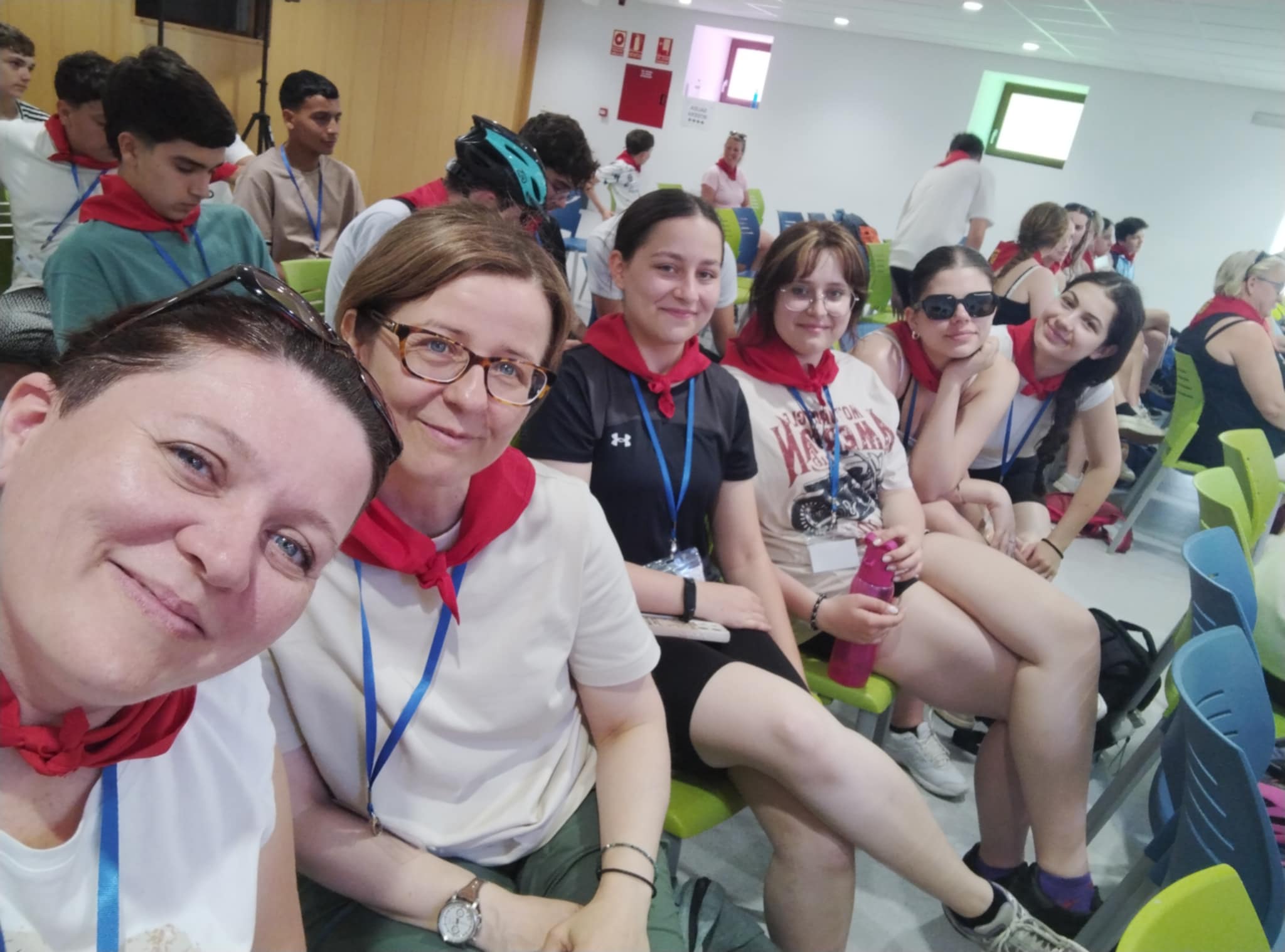
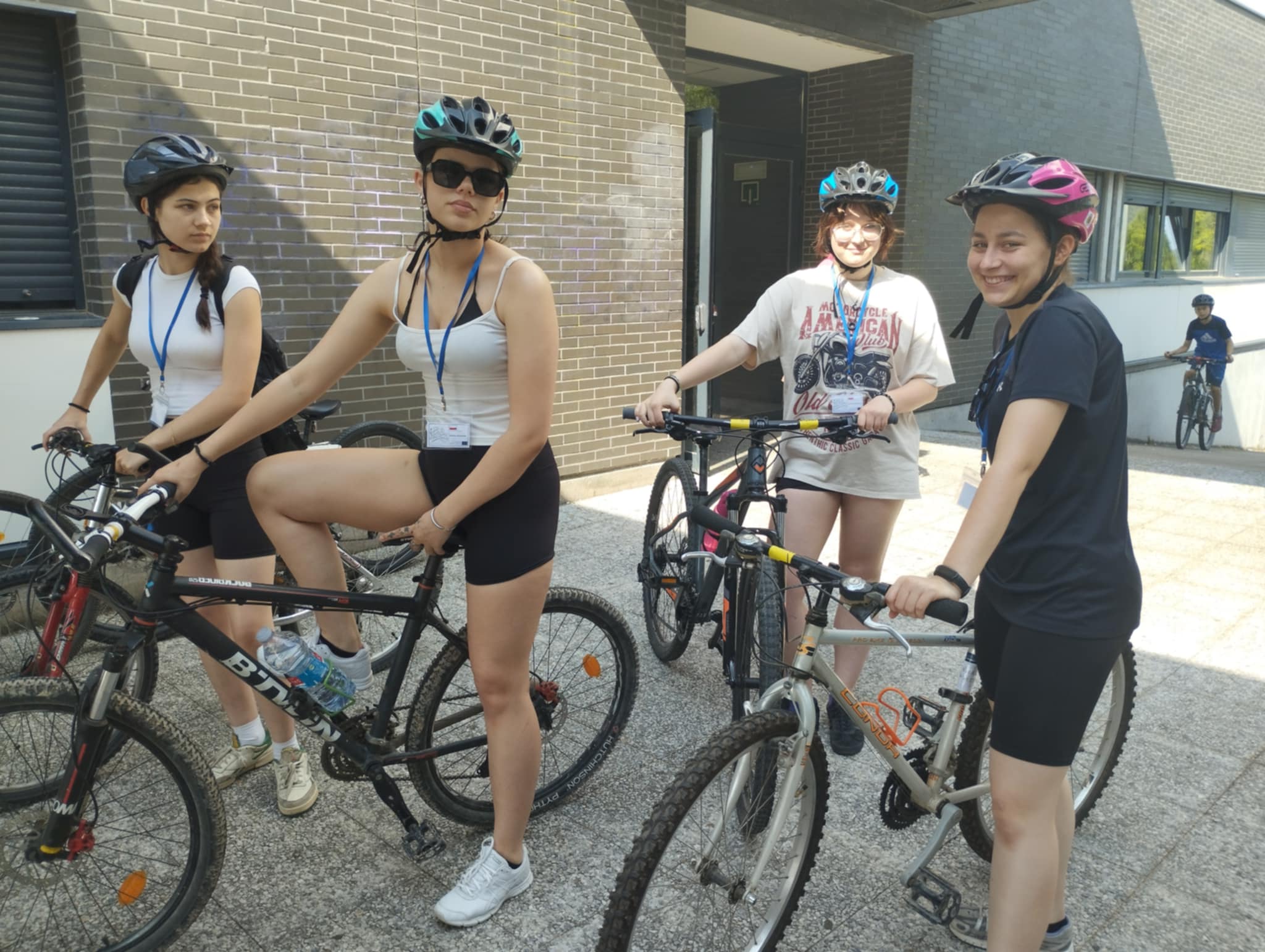
The day began at our partner school in Estella, where each group presented the activities they had carried out over the past year. In the afternoon, we set out on a bike trip with local seniors – intergenerational integration being one of the pillars of our project. During the ride, we discovered the charming corners of Estella, located on the Camino de Santiago.
A symbolic and touching moment was receiving traditional red scarves, worn by locals during fiestas – including the famous San Fermín festival in Pamplona. Other attractions awaited us too: a kayaking trip, a field game, and a shared dinner. The evening passed in an atmosphere that best reflects the spirit of Erasmus – joy, openness, and intercultural friendship.
Day 3 – Sierra de Urbasa: In the Land of Beautiful Water
On the third day, we went hiking in the Sierra de Urbasa mountains, following the trail along the crystal-clear turquoise Urederra stream, whose name, as our Spanish friends revealed, means “beautiful water.” It was a true encounter with nature in its purest form. Afterwards, we visited a family dairy farm, where we tasted local sheep’s cheeses – a pride of the region.
In the evening, we relaxed with our host families, sharing impressions and plenty of laughter.
Day 4 – Camino de Santiago: 10 Kilometers of Reflection
That day, we walked a section of the legendary Way of St. James – from Estella to Villamayor de Monjardín. We set out early in the morning, following the same route pilgrims from all over the world have traveled for centuries. Along the way, we stopped at the famous Fuente del Vino – a fountain that offers both water and wine. We hiked through the picturesque landscapes of Navarre, under the full sun and in good spirits, until we reached the
village at the foot of the castle hill. It was a journey not only physical but also spiritual – a time for conversation, reflection, and admiration of the world’s beauty.
Day 5 – Pamplona: In the Footsteps of the Running of the Bulls
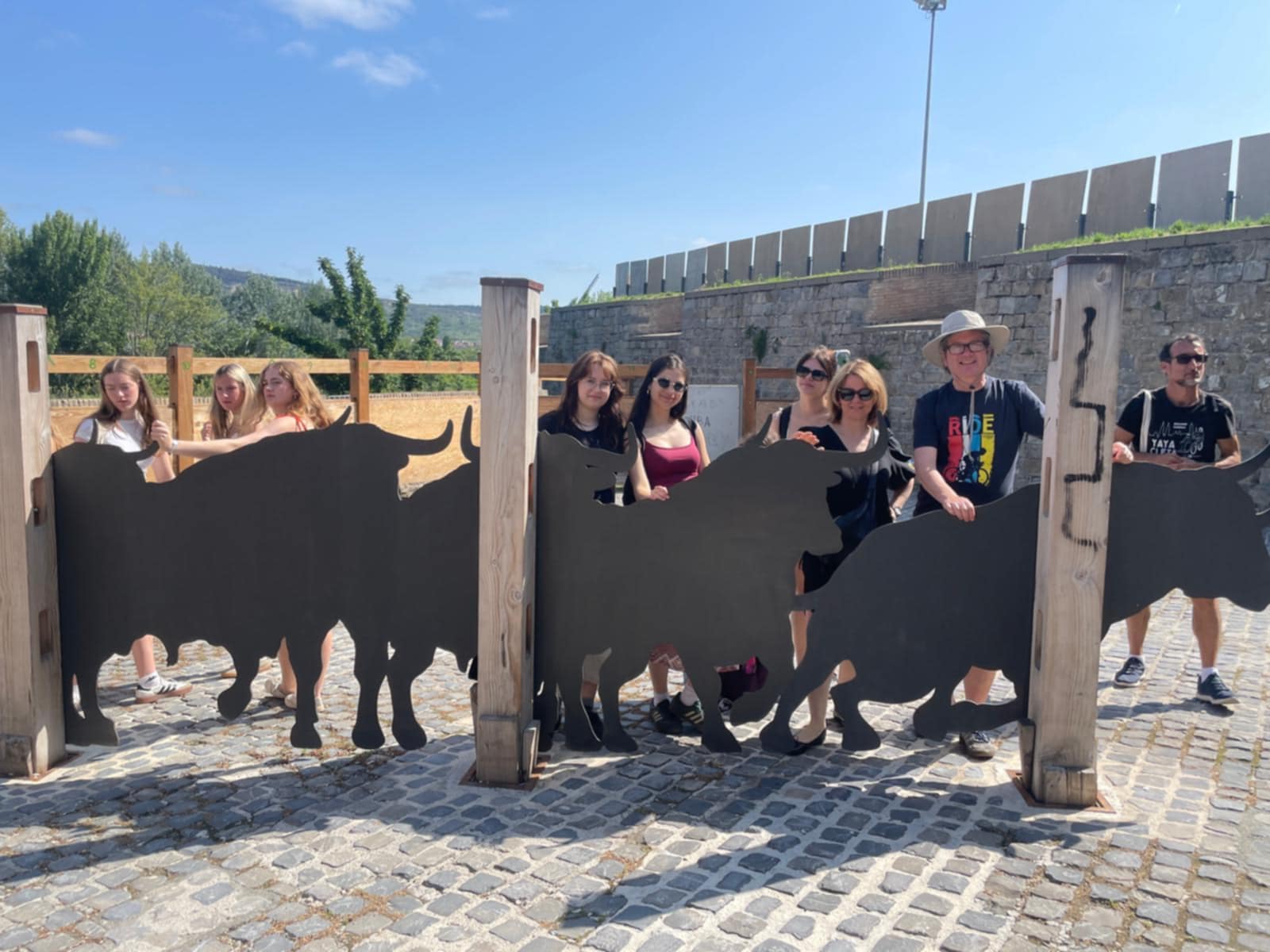
Our next stop was Pamplona – a city famous for the thrilling Running of the Bulls and the annual San Fermín fiesta. Walking through the streets, we visited the citadel, the Taconera Gardens, and the bull run route. Pamplona enchanted us with its atmosphere, history, and beautiful architecture. In the evening, a farewell ceremony was held in Estella, summarizing
three years of international cooperation. There were memories, words of gratitude, dancing, and emotions – a beautiful ending to a beautiful project.
Day 6 – Bilbao: A Final Walk and the Journey Home
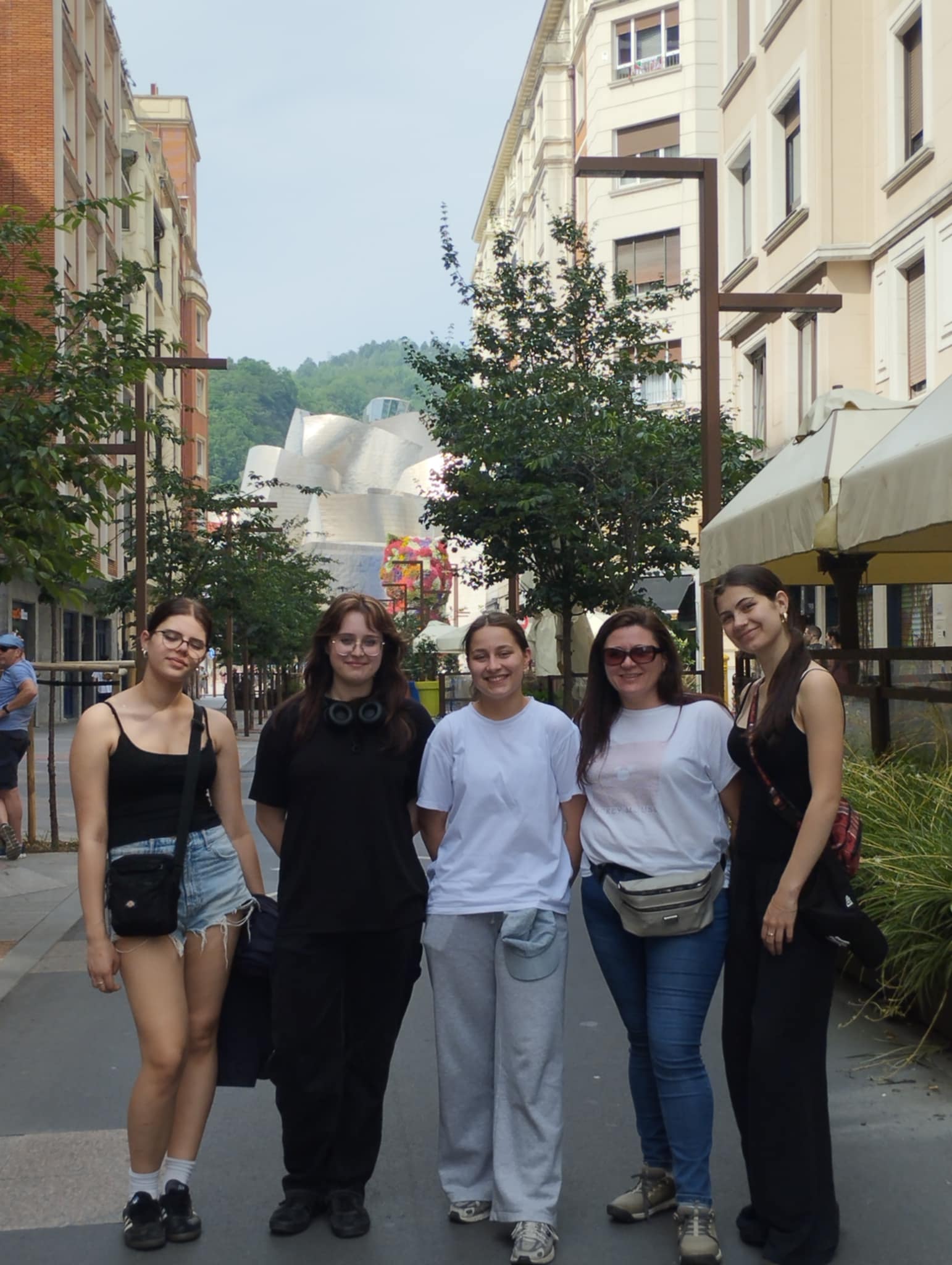
On the last day, we returned to Bilbao – a place that, after just a few days, already felt familiar. We spent time with our friends from Portugal, strolling through the old town, tasting local specialties, and savoring our final moments in the Basque Country. In the afternoon, we headed to the airport, saying goodbye to Spain, full of memories and inspiration.
Our stay in Spain gave our students more than just an opportunity to learn. It was a living lesson in culture, language, responsibility, and independence. Instead of an idealized picture from brochures, they discovered the true face of Spain – its wonderful people, rich culture, and everyday life. Once again, the Erasmus+ project proved that education does not end
within school walls – on the contrary, that is precisely where it begins.