Select Page

JUNE 14, FIRST DAY OF OUR TRIP TO POLAND!


We celebrate the 4th meeting of the project «GenCy4In&ClA». Our departure was on Thursday 13th, and after a long journey in Barcelona and Krakow, we arrived to Wodzislaw Slaski at 1 a.m.

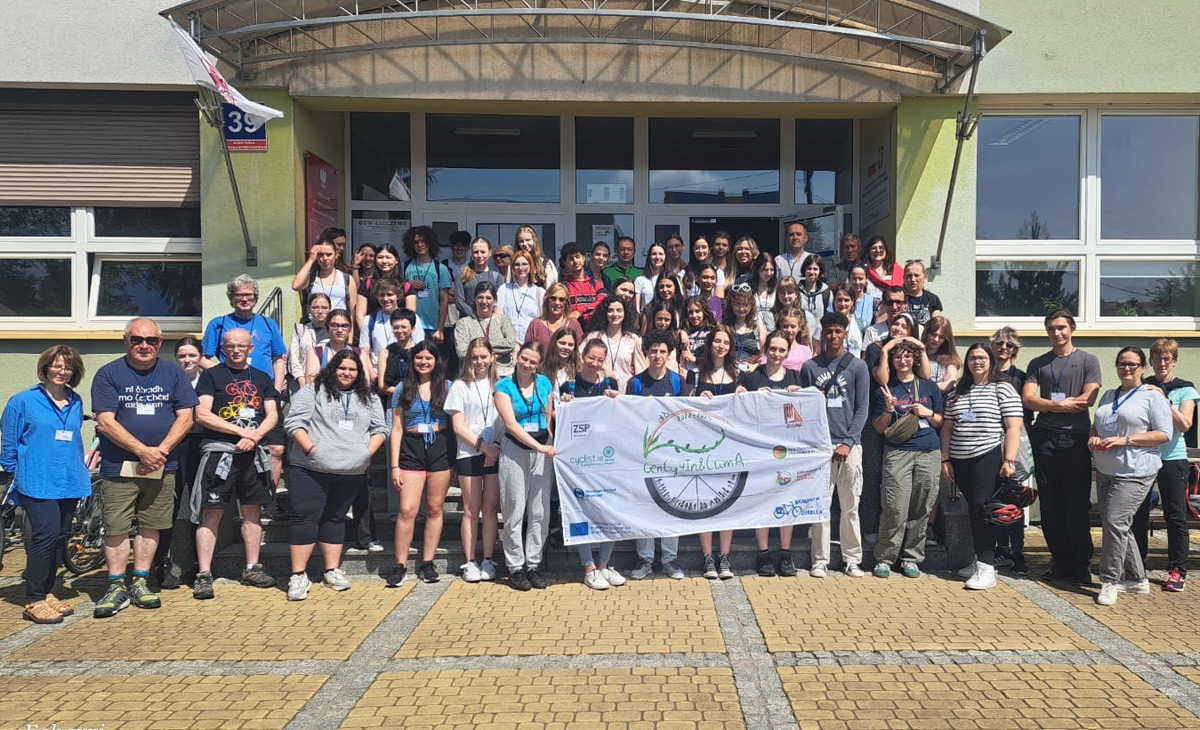
The day has started with the introduction of the last activities of the different members. It’s hard to believe what we are doing in the four countries the seven partners. Congratulations, Eramus team! Aftar that, we had a coffe and they showed us the high school.

The bikes waited for us in the sport center. We rode through the pavement of Wodzislaw on our way to the Balton park, because the streets and roads are very crowded. Once in the park, we have done a scavenger hunt in nature mixing participants of the four countries. It was really entertaining! Meanwhile, the adults had given a lap around the lake, which is amazing.

We played beach volley for a while and we ate pizza. From Balaton we cycled to Markowlice, where we visited the Orka lake. In there, we played volley, went for a walk, cycled… The cyclists, explored a beech forest, an outdoor church with the Way of the Cross, shrines, benches… Higher up they have seen a church made of wood, that has amazed them.

Here, you don’t know if you are having lunch, diner, or if it is just a snack. At 5 p.m we tasted a traditional soup, cooked by some women dressed with the regional blue costumes. Finally, we came back to the high school but this time enjoying a path free of cars and surrounded by crops (cornfields, wheat fields)…

Tomorrow…MORE AND BETTER!
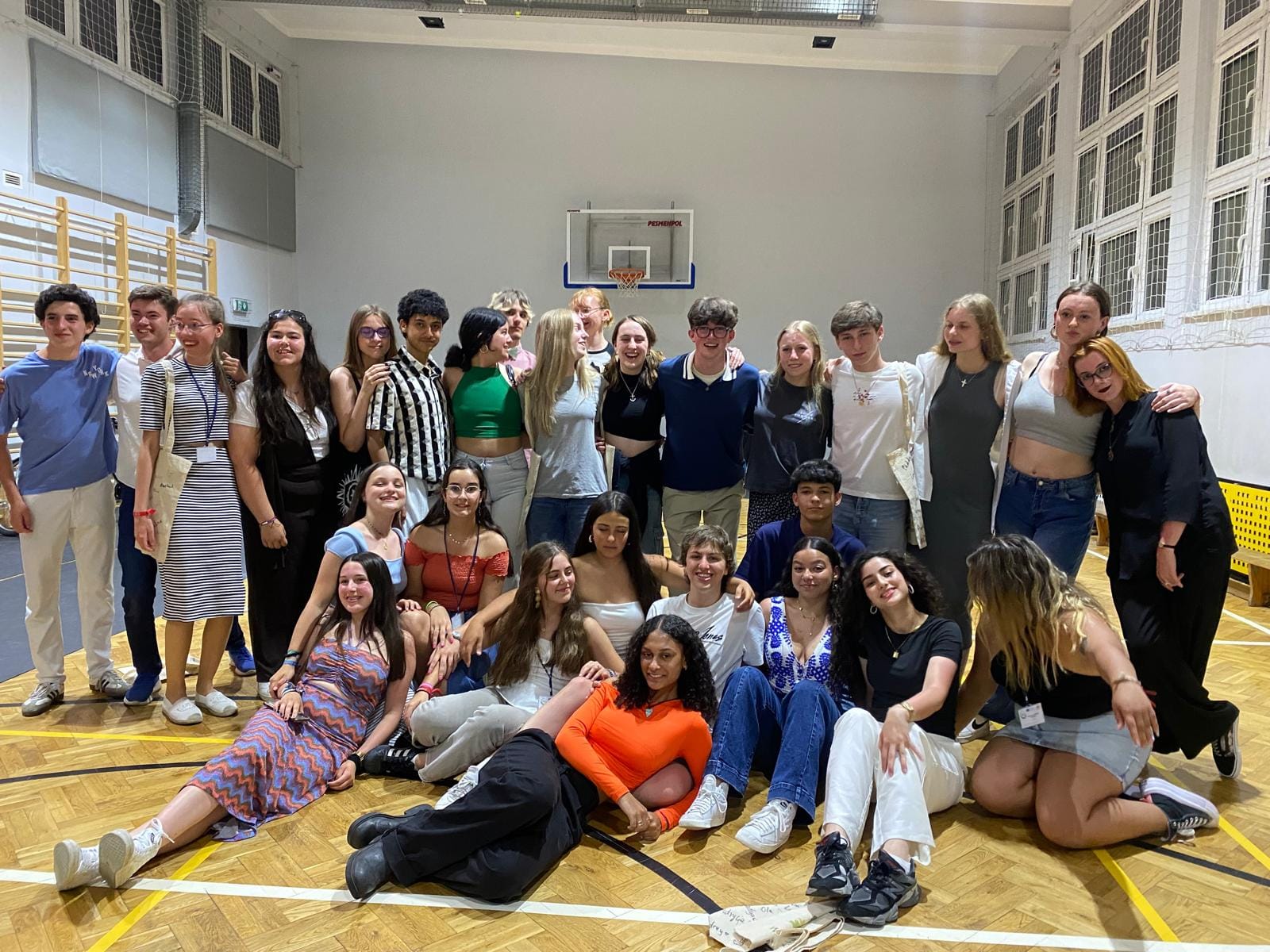
JUNE 15, KRAKOW AND WIELIZKA CAVES
The Erasmus day begins by meeting at 8:30 at the Amadeus hotel to take the bus and embark on a two-hour trip to one of the most important cities in Poland, Krakow, which is a World Heritage Site. Once there, we divided into language groups and began our guided tour of the charming streets and squares of this city.
After crossing a market with Polish food and souvenirs, we visited the emblematic Polish dragon where we were lucky enough to witness the moment when the statue expels fire from its mouth. Next, we climbed some stairs to Wawel Hill where we saw buildings such as the Austria Hospital, the royal castle and the Wawel Cathedral. We went down this hill and observed the Wawel wall on which the names of the people who contributed money for its reconstruction are written. At the end of the slope we met two happy men who sang us the song “la cucaracha” and other hits from the Spanish songbook.
Afterwards, we walked through the streets of the city while the guide told us very curious facts and we ended up at the restaurant where we ate. The menu was based on typical food; a beet soup, meat with potatoes and beets and for dessert a delicious cake they call “ciasto z galaretką i owocami”, although strawberry jelly cake is easier to pronounce.
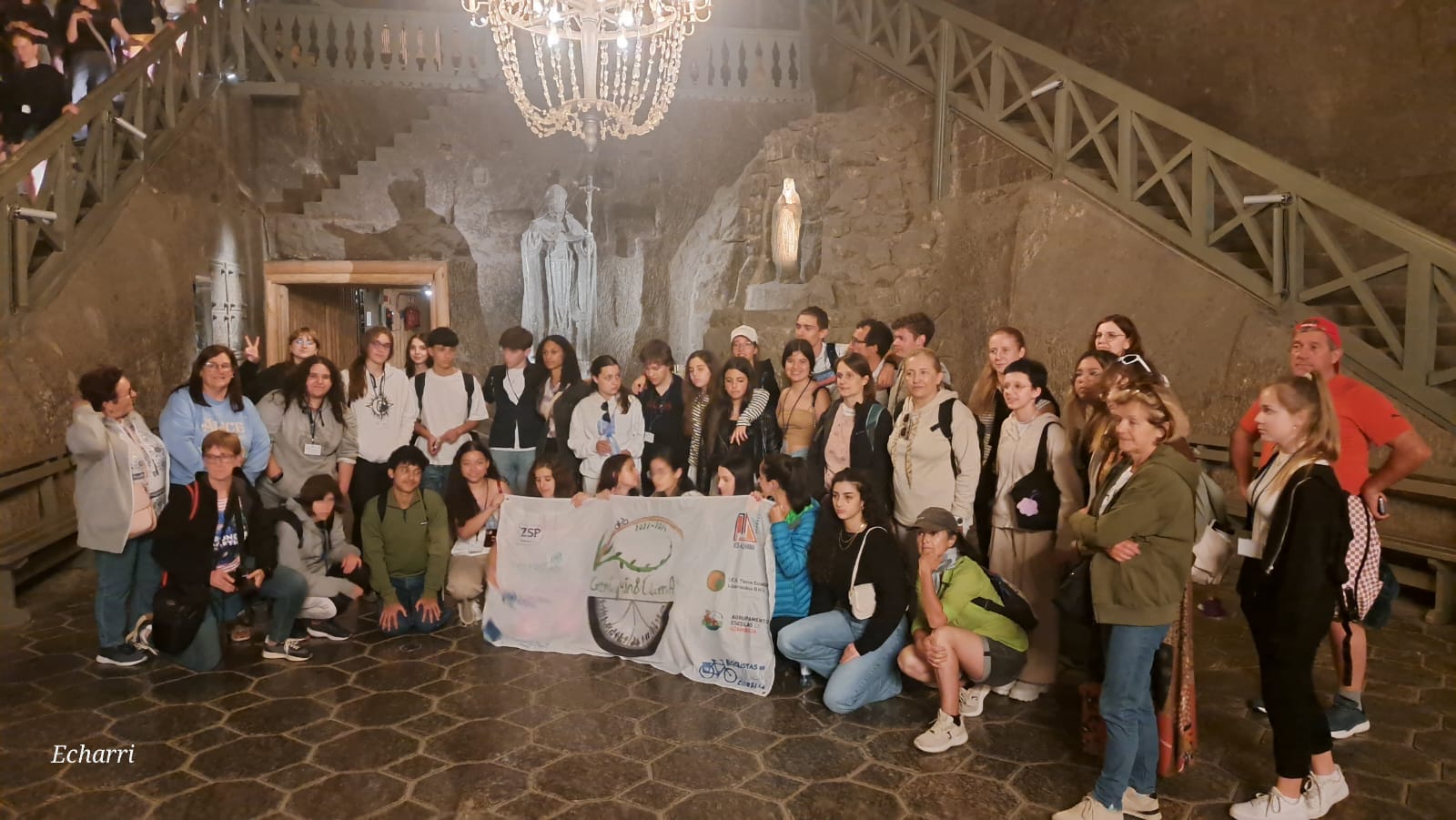
After half an hour of free time after lunch, we took a bus to the Wielizka salt mines, also a World Heritage Site. There, we descended 54 floors until we reached 63 meters below ground, although throughout the visit we descended to 130 meters. After visiting the mines, we took a very, very small elevator in which we quickly ascended to the surface. This has certainly been an experience to remember.
Aitana Ayuso and María Jiménez

JUNE 16, KAYAKING DAY!

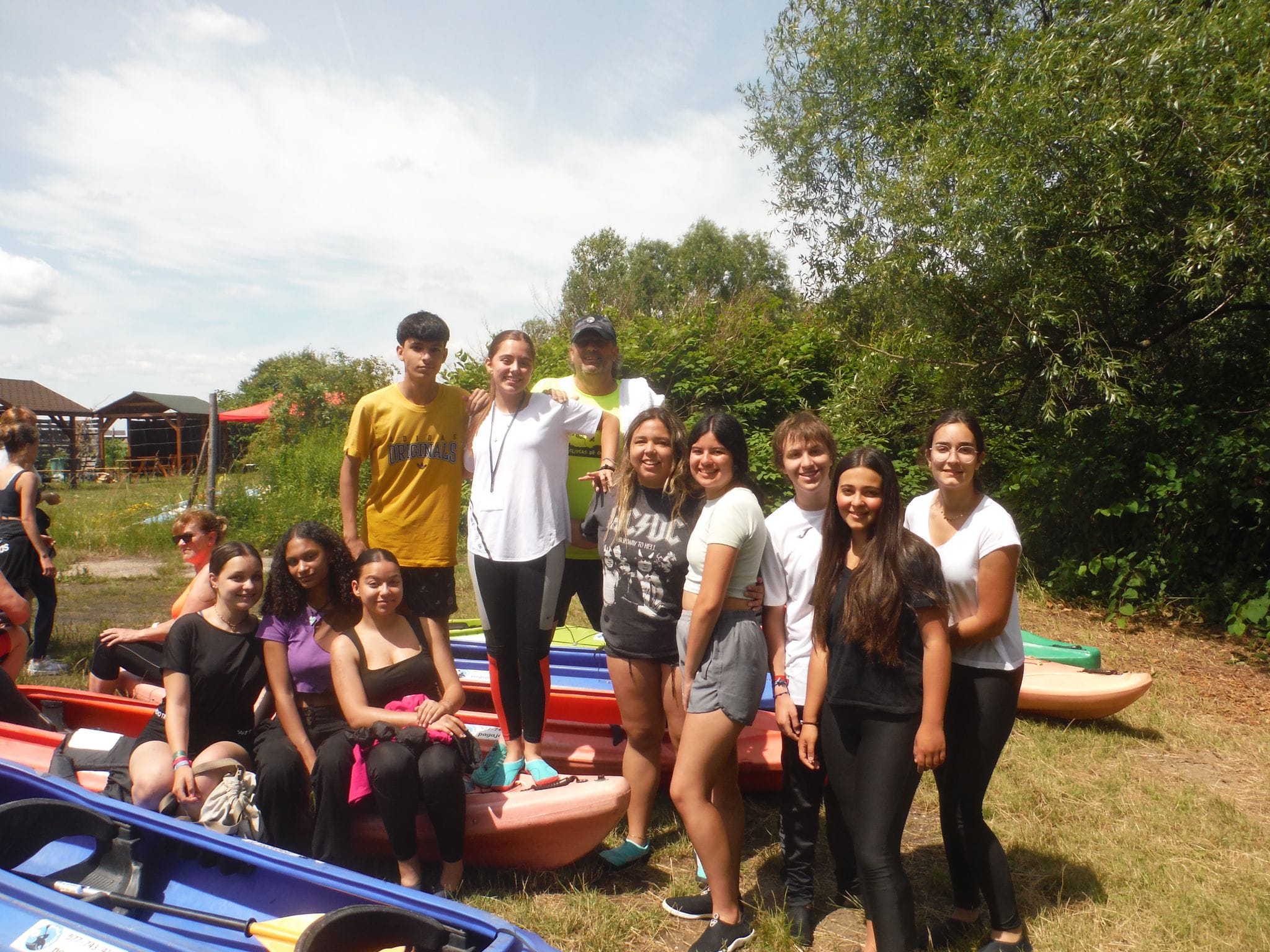
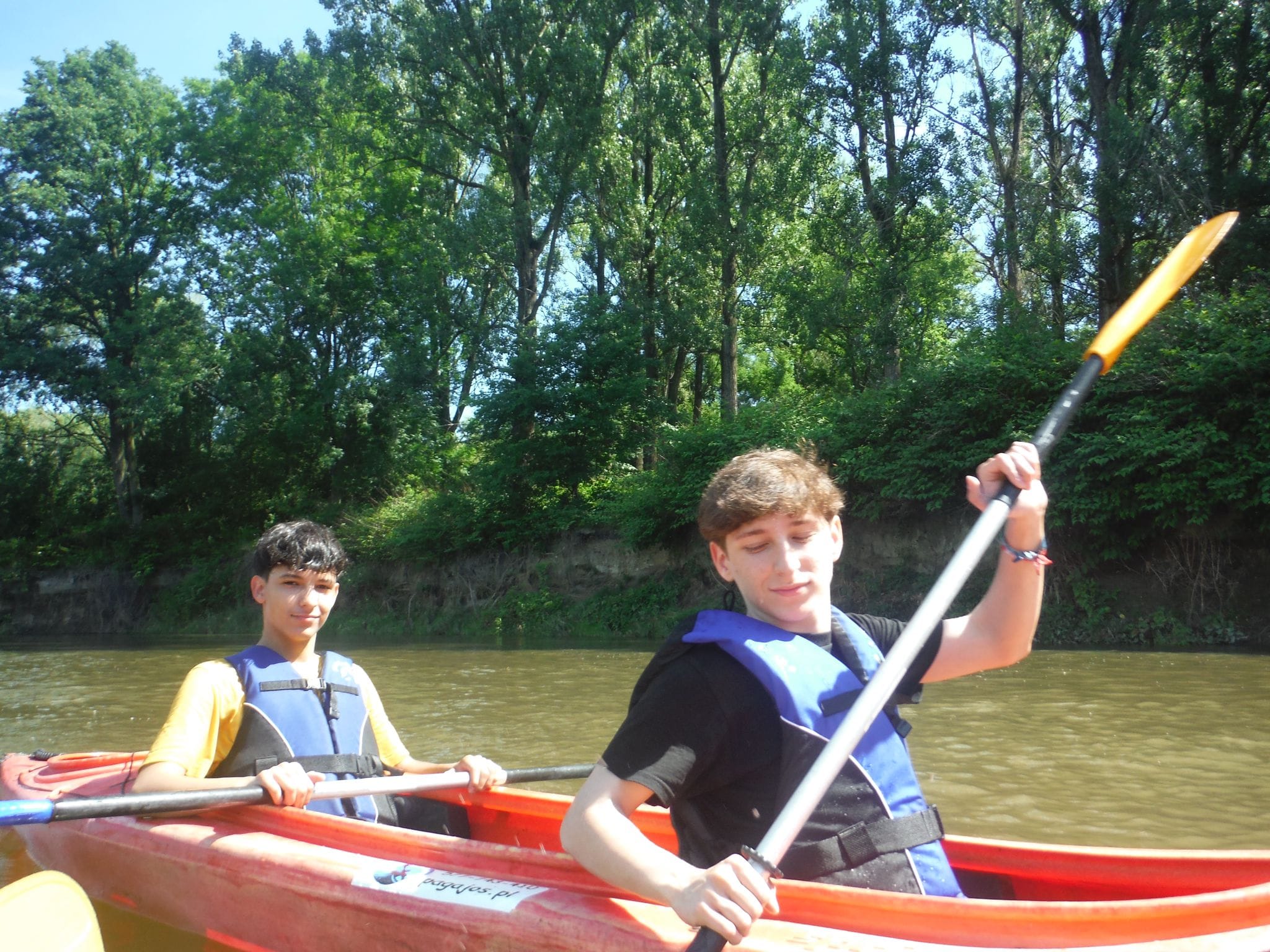
We started by meeting at 8:30 with the faculty at the Hotel Amadeus, as usual. The day was sunny and perfect for kayaking an 8 km stretch of the River Oder.
We did some games with the oars in circles that were really fun. It was impossible not to crash and not lose the oar, and there was the funny part. They gave us some basic notions of movements in the water and, in pairs, we went down to the river Oder. I went with my brother Pablo and, as you can imagine, the tragedy was masked.
The Oder on that stretch is spectacular: lots of vegetation, beautiful meanders, river beaches… Everything seemed idyllic until we got tangled in a maneuver, we didn’t understand each other and ended up overturning. They picked us up with the raft and there we went recovering from the scare. My brother, who had been eager, rode with Iraia in a canoe and I, so happy, did not argue or end up in the river. By the way, some couples were picking up trash by the river (bottles and carreras) and then filled a trash bin where we landed.
We did a barbecue in a very nice campsite with several lakes. Many houses, all made of wood, faced the water, spectacular!
In the afternoon we went to the school for the farewell party. There were several performances of violin, piano, songs by Alejandra and Daria (precious!)… We did an examination of Polish customs (kneading breadcrumbs, eating cucumber with horseradish and saying unpronounceable Polish words) and we earned a certificate. We ended up doing a lap dance.
As always, the goodbye was the hardest part. After a party full of dances, titles, various challenges and music we gave each other a thousand hugs and stayed for future meetings. We already miss them!”

JUNE 17, LEZKOV NATURE PARK AND KATOWICE
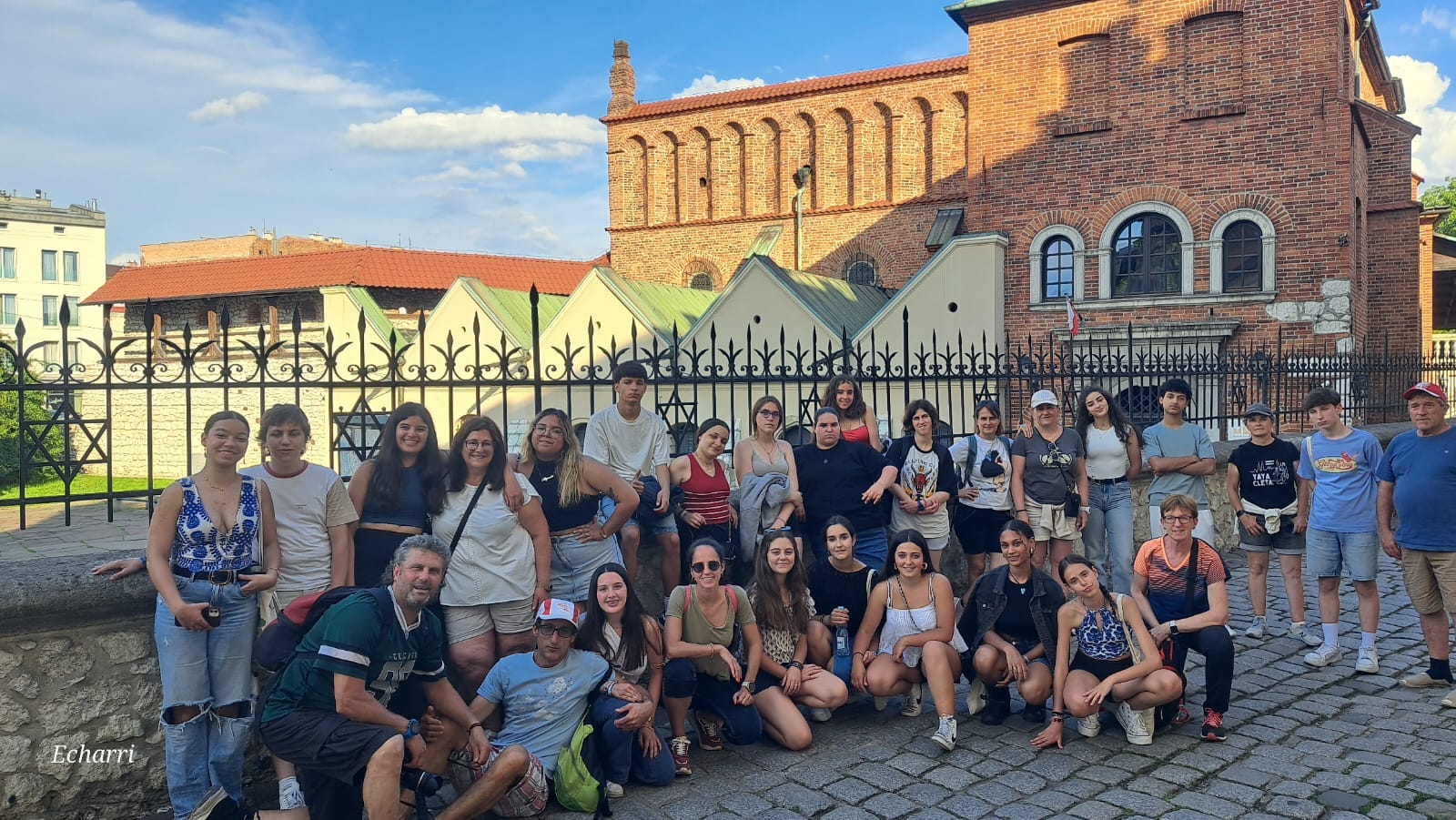
Irene López Sáinz tells us about the third day in Poland, in the #GenCy4In&ClimA project co-financed by the European Union.
Today we all met at the Amadeus Hotel at 7:45 am. During the morning we were in the Lezkov nature park and we did a photo contest in pairs where we had to show the landscape, the weather and ourselves in the photo. We saw swans, ducks, coots… The landscape was breath-taking. IT was raining though, but we didn’t mind.
Afterwards we went to the Silesian Museum in Katowice. We divided ourselves into groups. The museum and the staff told us about the history of Poland, also had paintings made by miners. At the end of the guided tour we stopped to eat a picnic and then we got on the bus to Wodzislaw. After, we have free time with our hosts, GREAT!

JUNE 18, AUSCHWITZ AND JEWISH QUARTER IN KRAKOW

Finally the last day of our visit to Poland came. It might sound very sad but the activities prepared for Tuesday the 18th were among the most anticipated. We got up early, finished packing our bags and with tears in our eyes we said goodbye to the families who hosted us these days, thanking them for treating us in a very special way and making us feel part of the family.
Then it was time to get on the bus and head to Auschwitz for a guided tour that told us the tragic stories that happened there, in the largest extermination camp of Jews built by the Nazis. It was a really harrowing experience. It’s really hard to believe all the atrocities that took place there. As the guide told us, in the extermination and concentration camps human life had no value, people considered “not pure” by the Nazis were treated as animals or even objects, exterminated in an industrial and massive way.
We continued our visit to Birkenau, the largest concentration and extermination camp in Europe. Both visits were accompanied by curiosities, anecdotes and important facts, such as that between Auschwitz and Birkenau 1,200,000 people died. Mostly Jews but also Gypsies and Poles, among others. He also recommended films and interviews to expand our knowledge about the lives of the prisoners of these concentration camps.
This morning we learned many new things about one of the most cruel and dehumanizing chapters in European history. After finishing the visit and still with a knot in the throat, we got back on the bus towards Krakow.
It was very hot and all we wanted was to be in the shade.
The bus left us far away and we arrived at the hostel dragging our bags. We took advantage of that couple of hours to eat and rest.
At 5 o’clock we met in the synagogue, to learn about the Jewish quarter and its history.
Our guide was Raul, a guide from Valladolid who was a 10 out of 10. He told us about the locations where “The List is Schindler” was filmed. Honestly, it was very interesting and caught our attention for two long hours.
We crossed the river Vistula by a footbridge full of padlocks put by couples in love. Raul told us the plan was to melt them and make with that metal the bank of love.
We went to many corners of the ghetto. We were moved by the monument of the 65 chairs in memory of the 65,000 Jews who died from 1939 to 1945. Only 3,000 survived.
Once the visit was over, we were able to walk through Krakow for the last time to end this beautiful Erasmus trip.
A group of three strays had to make an express getaway to Katowice at night, but that’s a whole other story…
Nadya Rocha